
Alternative for Germany (AfD) is a far-right, right-wing populist, national conservative, and in parts völkisch nationalist political party in Germany. It is the largest opposition party in the Bundestag and sits in the Europe of Sovereign Nations Group in the European Parliament. Founded in 2013 to oppose the policies of the eurozone, it later moved further right, expanding its platform to include opposition to immigration, Islam, and the European Union. Several of its state associations and factions have been linked to far-right movements and observed by state offices for the protection of the constitution.
Founding and early years


The party grew out of the Electoral Alternative 2013, a group formed in September 2012 by Alexander Gauland, Bernd Lucke, and the journalist Konrad Adam to criticise German policy on the eurozone crisis and bailouts for southern European countries. AfD was founded in February 2013 and presented itself at its first convention in Berlin in April of that year. Narrowly missing the electoral threshold in 2013, it won seats in the 2014 European Parliament election and later secured representation in most German state parliaments.
Shift to the right


In its early years AfD described itself as an economically liberal, Eurosceptic, and conservative movement. Under successive leaderships it adopted a more radical stance, particularly after 2015, when its ideology came to emphasise German nationalism, ethno-nationalism, and opposition to Muslim immigration. Its later policies include welfare chauvinism, Euroscepticism, and closer relations with Russia, and the party has been criticised for xenophobic rhetoric and historical revisionism, which its leadership denies.
Electoral support


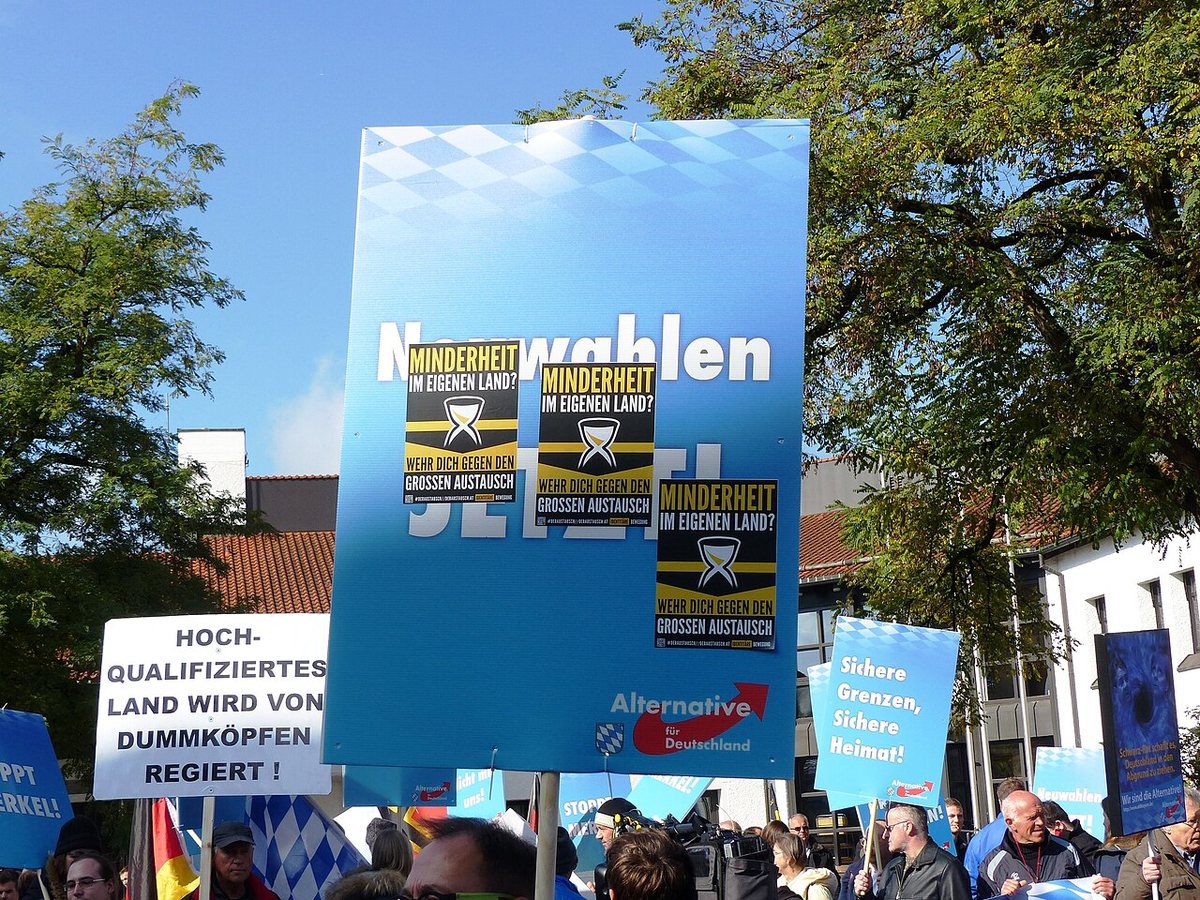


The party performed strongly in the 2017 federal election, becoming the third-largest party in the country, before falling to fifth place in 2021. After the 2025 federal election it became the second-largest party. Its support is concentrated in the former East Germany, a region where economic and integration issues have persisted since reunification.