
Alexis of Russia (Alexei Mikhailovich) was Tsar of all Russia from 1645 until his death in 1676. He was the second tsar from the House of Romanov and the first to sign laws on his own authority. His reign included wars with Iran, Poland and Sweden, as well as internal unrest such as the Salt Riot in Moscow and the Cossack revolt led by Stenka Razin. By the time of his death, Russia spanned almost 8.1 million square kilometres.
Early reign


Alexis came to the throne at the age of sixteen after his father's death in 1645. He was placed under the guidance of his tutor Boris Morozov, a shrewd boyar open to Western ideas. Morozov pursued a peaceful foreign policy and sought to limit the privileges of foreign traders. His attempt to triple the tax burden, however, provoked popular anger, and in 1648 Muscovites rose against his faction in the Salt Riot. The unrest contributed to the issuing of a new legal code, the Sobornoye Ulozheniye, in 1649.
Military and religious policy


Alexis reformed the army by creating New Order Regiments of reiters, soldiers, dragoons and hussars, and hired many European military specialists. In religious matters he supported Patriarch Nikon during a schism in the Russian Orthodox Church over unpopular liturgical reforms. His reign also saw rebellions in Pskov and Novgorod, a copper coin crisis leading to the 1662 Copper Riot, and the revolt of Stenka Razin, who was captured and executed in 1671.
Wars and expansion
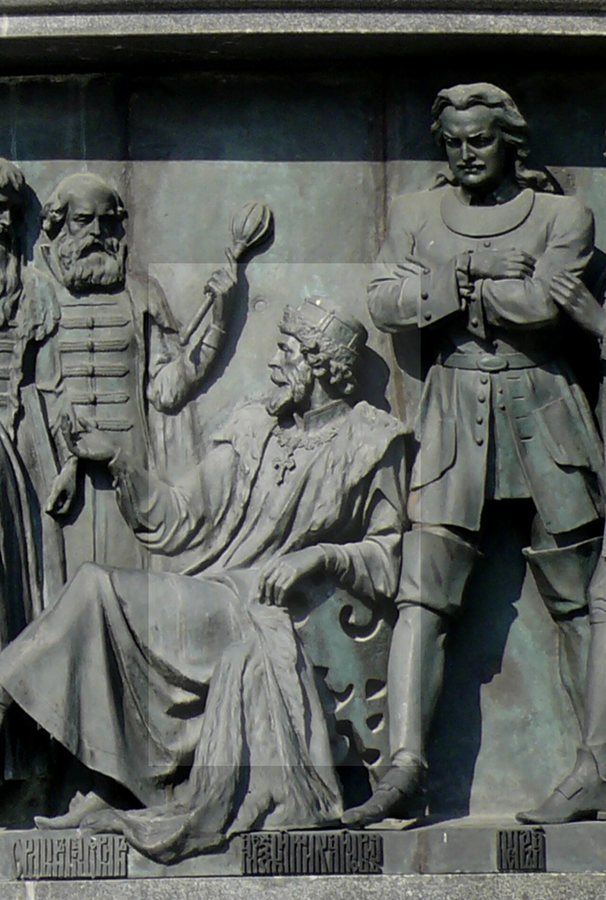

Alexis fought wars against Safavid Iran, Poland and Sweden. In 1654 Russian forces took many towns, including Smolensk, and the Treaty of Pereyaslav gave Russia dominance over the Cossack Hetmanate in left-bank Ukraine. Later campaigns against Sweden, including the siege of Riga, produced limited gains at heavy cost. Such conflicts strained the Russian economy and public finances during the 1660s.