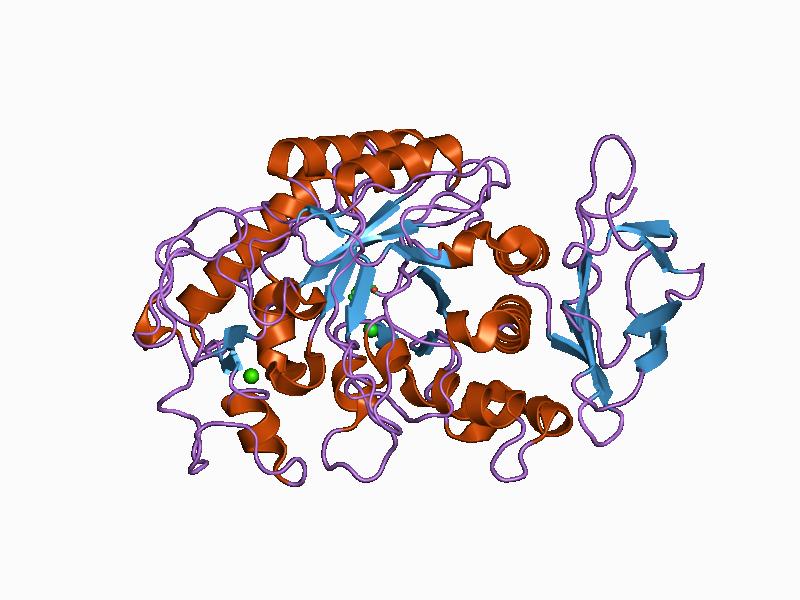
Alpha-amylase 1A is a digestive enzyme that in humans is encoded by the AMY1A gene. This enzyme is found in saliva and functions to start the break down of carbohydrates like starch. AMY1A is one of a collection of nearby human genes (including AMY1B and AMY1C) that encode identical saliva alpha-amylase proteins, with the exact number of genes varying from individual to individual.
Function
Amylases are secreted proteins that hydrolyze 1,4-alpha-glucoside bonds in oligosaccharides and polysaccharides, and thus catalyze the first step in digestion of dietary starch and glycogen. The human genome has a cluster of several amylase genes that are expressed at high levels in either the salivary glands (AMY1A, AMY1B, and AMY1C) or pancreas (AMY2A and AMY2B). This gene encodes an amylase isoenzyme produced by the salivary gland. Alternative splicing results in multiple transcript variants encoding the same protein.


