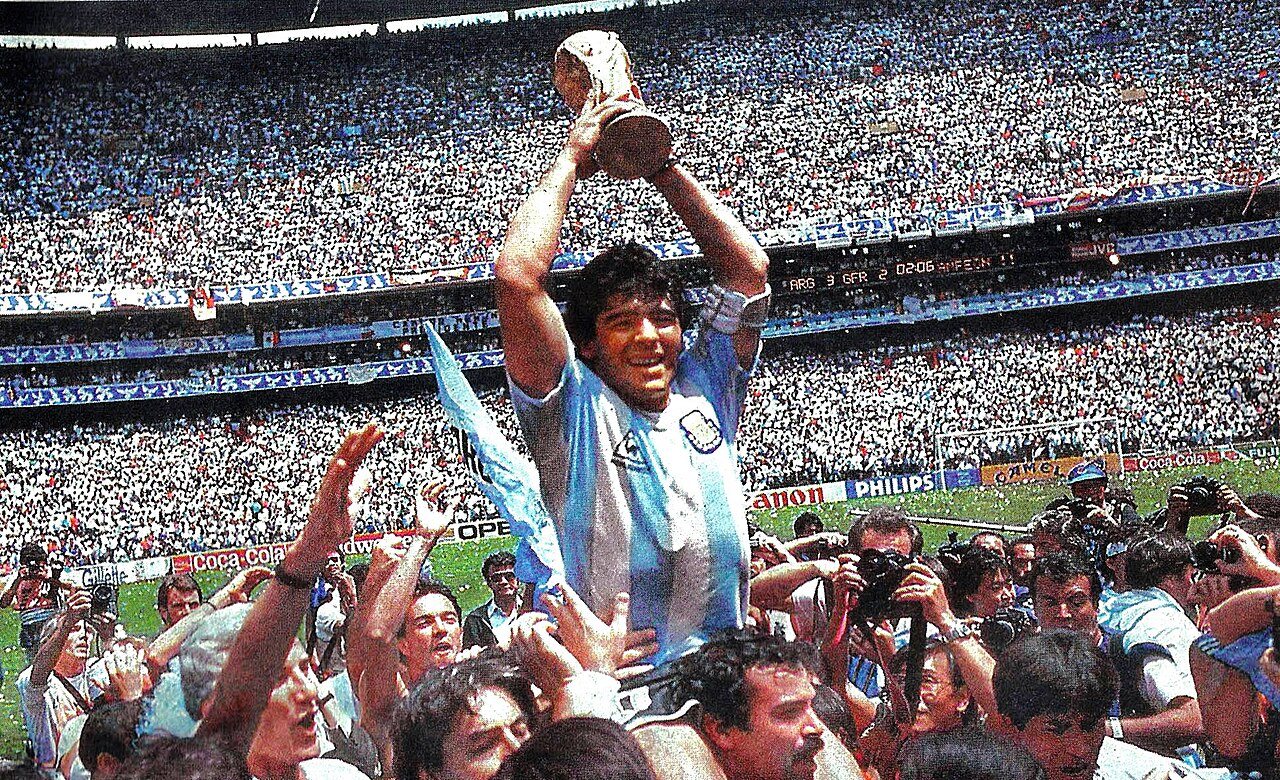
The 1986 FIFA World Cup was the 13th FIFA World Cup, the quadrennial football tournament for men's senior national teams. It was held in Mexico from 31 May to 29 June 1986, and was the second tournament to use a 24-team format. Argentina won the title, their second after 1978, with captain Diego Maradona playing a central role. Mexico became the first country to host the World Cup twice, having also hosted the 1970 edition.
Host selection


Colombia was originally chosen by FIFA to host the tournament, but it withdrew in November 1982, citing the high costs of hosting a 24-team competition. Mexico, which had also hosted in 1970, was selected as the replacement host in May 1983. The decision was controversial, as the United States and Canada had also bid, and critics questioned the process. A severe earthquake in September 1985 raised doubts about Mexico's readiness, but the stadiums were not damaged and preparations went ahead.
Tournament and legacy


The tournament introduced a new format in which the second round was played as a knockout stage rather than in groups. Italy, the defending champions, were eliminated by France in the round of 16. Argentina beat West Germany 3–2 in the final at the Estadio Azteca in Mexico City. Maradona scored or created many of the team's goals, including the quarter-final against England, which featured his controversial
Hand of God


goal. The tournament also popularised the Mexican wave among spectators.